Quelle est la capacité de charge des échafaudages en aluminium ? Le guide complet pour une utilisation sûre et efficace
Apr 18, 2026
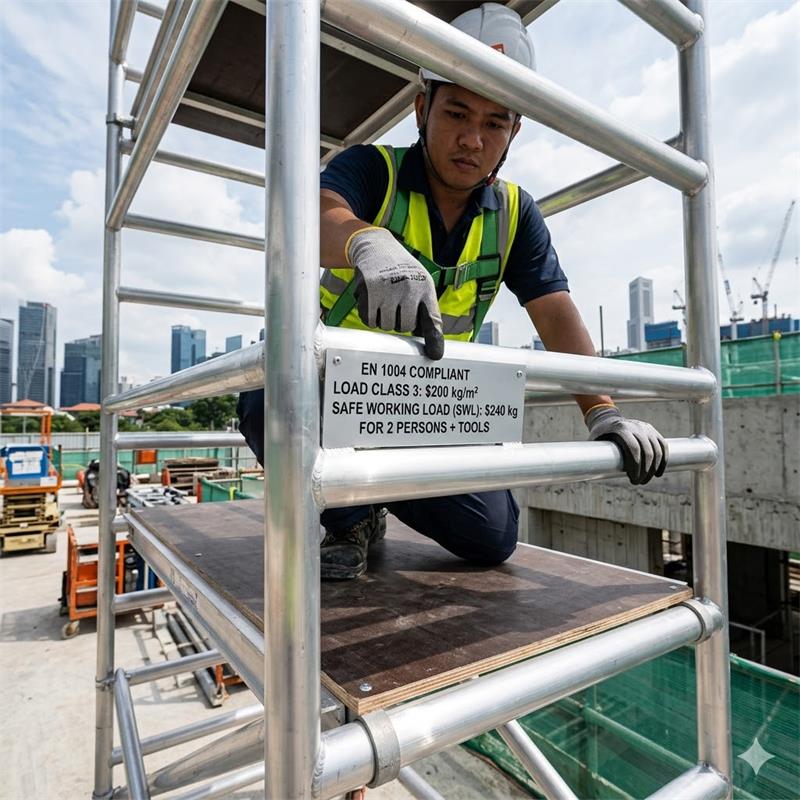
échafaudages en aluminium L'échafaudage en aluminium est aujourd'hui un élément courant et largement utilisé dans les travaux de construction et de maintenance modernes qui exigent flexibilité, solutions économiques et résistance à la dégradation environnementale. Toutefois, la question primordiale que tous les chefs de projet, responsables de la sécurité et clients doivent se poser avant d'utiliser un échafaudage en aluminium est la suivante : quel poids peut-on supporter en toute sécurité sur un échafaudage en aluminium ?Une mauvaise évaluation de la charge admissible d'un échafaudage expose votre chantier à un risque de catastrophe (risque catastrophique) ou engendre une perte d'efficacité dans ses opérations. Ce guide détaillé vous fournit toutes les informations nécessaires pour garantir la sécurité et la productivité de vos chantiers, en vous aidant à mieux comprendre les différences de calcul des charges admissibles, les réglementations de sécurité en vigueur dans les différents pays et les différences entre l'aluminium et l'acier. Pourquoi la capacité de charge est essentielle à la sécurité des échafaudages La capacité de charge correspond au poids maximal que peut supporter un échafaudage sans dépasser ses limites et provoquer sa rupture. La charge totale admissible par un échafaudage comprend le poids de tous les travailleurs présents sur l'échafaudage, ainsi que celui des outils et matériaux qui s'y trouvent.L'aluminium est un matériau de choix pour les échafaudages grâce à son excellent rapport résistance/poids, mais ses propriétés techniques présentent des limitations qui imposent le strict respect des normes d'ingénierie. En matière de sécurité d'utilisation, les ingénieurs utilisent une charge maximale d'utilisation (CMU) pour déterminer les conditions d'utilisation sécuritaires de l'échafaudage. La CMU inclut un coefficient de sécurité (généralement de 4 pour 1) afin de prendre en compte les charges dynamiques, telles que la marche sur l'échafaudage ou le vent. Le dépassement de la CMU constitue une infraction aux règles de sécurité et engendre des risques de défaillance structurelle. Déchiffrer les classes de charge : la norme EN 1004 Les tours mobiles en aluminium de haute qualité sont généralement conçues et testées selon la norme EN 1004. Il s'agit d'une norme internationale qui classe tous les échafaudages en catégories de « classes de charge » en fonction de leur capacité de charge par mètre carré.Échafaudages de classe 2Capacité de charge : 150 kg/m2 (kilogrammes par mètre carré)Utilisations appropriées : Travaux légers tels que peinture, nettoyage ou réparations électriques mineures. Un seul opérateur sera présent sur la plateforme à la fois, avec un minimum d'outils manuels ; la longueur maximale des outils n'est pas requise dans ces conditions.Échafaudages de classe 3Capacité de charge de 200 kg/m³2.Utilisation recommandée d'un échafaudage de classe 3 : Norme du secteur pour la construction générale. Supporte deux personnes, tous types d'outils électriques et une quantité modérée de matériaux de construction. Conseil de pro : Toujours se référer à la plaque d'identification du fabricant. Un échafaudage à tour conforme à la norme EN 1004 indiquera sa classe de charge, la hauteur maximale de sa plateforme et le poids total maximal admissible. Charges réparties vs charges ponctuelles : une distinction cruciale L'une des erreurs d'appréciation les plus fréquentes sur un chantier est une mauvaise évaluation de la répartition des charges sur la plateforme. Il est essentiel de comprendre les principes physiques de cette répartition afin d'éviter tout risque de rupture de la plateforme, notamment par affaissement du tablier. Charge uniformément répartie (UDL)On suppose que la charge sera uniformément répartie sur toute la surface. Exemple : Un tablier standard de classe 3 mesure 2,0 m (longueur) x 0,6 m (largeur) = 1,2 m.2Les calculs relatifs à la conception universelle de l'apprentissage (CUA) pour cette plateforme sont les suivants :200 kg/m2 x 1,2 m2 = capacité totale de 240 kg. Charges concentrées (charges ponctuelles)Une charge ponctuelle concentrée désigne le poids total d'un élément situé à un endroit précis de la structure et qui se dépose sur une petite surface de celle-ci. Il peut s'agir d'un poids uniforme placé à un endroit précis (un lourd seau de mortier déchargé de l'échafaudage ou une machine). Même si ce poids est inférieur à la limite de charge uniformément répartie (CUR), une charge ponctuelle concentrée peut tout de même provoquer des fissures dans la structure. Il est impératif de toujours répartir les matériaux lourds sur les traverses (poutres de support horizontales) et non au centre de la plateforme. Échafaudages en aluminium ou en acier : le compromis en matière de capacité de charge En règle générale, le choix d'une application pour l'un ou l'autre de ces matériaux dépendra moins de savoir lequel est « meilleur » que de celui qui est « approprié » en fonction des exigences de charge de la structure. Le rapport résistance/poidsLorsqu'on compare l'acier à l'aluminium, la principale différence réside dans la densité et la capacité de charge qui en découle. L'acier possède généralement une densité supérieure à celle de l'aluminium, ce qui lui confère une capacité de charge globale plus élevée (généralement classée en classe 4 ou 5) pour des charges allant jusqu'à 600 kg/m².2Par conséquent, l'acier est le matériau de prédilection pour les applications de maçonnerie lourde et l'étaiement. À l'inverse, l'avantage de l'aluminium par rapport à l'acier réside dans son rapport efficacité/charge. FonctionnalitéÉchafaudages en aluminiumÉchafaudages en acierClasse de charge typiqueClasses 2 et 3 (150-200)kg/m2)Classes 4, 5 et 6 (300-600 kg/m³)2)charge morteTrès faible (1/3 du poids de l'acier)Une valeur élevée accentue les contraintes sur la structure de base.Vitesse d'assemblageRapide ; aucun outil ni grue requis.Lent, exigeant en main-d'œuvre et lourd.CorrosionTrès résistant ; idéal pour l'extérieur.Sensible à la rouille s'il n'est pas galvanisé. Le facteur « rigidité »L'acier possède un module d'élasticité plus élevé, ce qui lui confère une plus grande rigidité. L'aluminium, plus flexible, peut présenter un léger « rebond ». Bien que ce phénomène soit mathématiquement sûr dans les limites de charge maximale d'utilisation (CMU), il est indispensable que les travailleurs soient correctement formés au comportement de l'équipement afin de garantir leur sécurité en hauteur. Facteurs clés qui réduisent la capacité effective La capacité nominale d'un échafaudage n'est valable que si la structure est correctement construite. Plusieurs facteurs peuvent réduire votre marge de sécurité :Hauteur de la tour - Plus la hauteur augmente, plus la stabilité latérale diminue. Afin de maintenir leur centre de gravité bas, les tours en aluminium de grande hauteur doivent être équipées de stabilisateurs pour assurer leur soutien à la base.Forces environnementales - La pression exercée par le vent. Lors du séchage, les charges maximales admissibles s'appliquent généralement pour des vitesses de vent allant jusqu'à 45 km/h. Au-delà de 45 km/h, la tour doit être fixée à une structure solide.Intégrité du lanceur - La totalité du poids de la structure repose sur les roulettes ; si une tour supporte une charge de 800 kg et utilise des roulettes de très mauvaise qualité, ces dernières constitueront le maillon faible de la chaîne de sécurité et risqueront de provoquer un effondrement. Il est donc impératif de s’assurer que toutes les roulettes sont correctement fixées et adaptées à la charge de la tour.Nivellement - Un échafaudage présentant un défaut d'aplomb de seulement 1 % perd en efficacité de charge verticale. Utilisez des pieds réglables pour garantir une structure parfaitement horizontale. Maintenance : Garantir l'intégrité de la charge à long terme Pour garantir que votre échafaudage en aluminium respecte constamment sa capacité nominale, des inspections régulières sont obligatoires. Vérifiez les points suivants :Plis et bosses : En cas de bosses, la résistance au flambage (la force d'un objet lorsqu'il est poussé latéralement) sera moindre. Joints soudés : Examinez attentivement les joints soudés afin de déceler tout signe d'usure anormale le long des bords, en particulier aux endroits où les barreaux entrent en contact avec le cadre. Crochets de plateforme : Assurez-vous que les crochets de la plateforme ne se sont pas allongés ou pliés, car ce sont les principaux points qui supportent le poids (transfèrent les charges) sur la plateforme. Conclusion Pour bien comprendre les limites de charge d'un échafaudage en aluminium, il est essentiel de respecter les normes en vigueur et de faciliter l'exécution de tâches qui nécessiteraient normalement un plus grand nombre d'employés si ces charges devaient être transportées quotidiennement. Un échafaudage en aluminium de classe 3 possède un poids replié qui le rend facilement transportable pour des projets de construction légère à moyenne, ainsi que pour l'entretien des façades (extérieures) et des aménagements intérieurs. Grâce à sa portabilité et à sa capacité de charge suffisante, il offre un retour sur investissement supérieur à celui des échafaudages en acier à structure lourde.Consultez toujours les spécifications du fabricant concernant les charges, leur répartition et leur point d'application, et formez vos employés à reconnaître les différences entre elles. Prêt à sécuriser votre chantier ?Ne comptez pas sur la chance pour votre sécurité ! Notre équipe qualifiée vous aidera à choisir la solution la plus adaptée parmi notre vaste gamme d'échafaudages en aluminium haute résistance, disponibles à la location ou à la vente. Nous vous conseillerons également sur l'acquisition d'équipements conformes à la norme EN 1004. Pour recevoir une proposition personnalisée et une analyse complète de la sécurité de vos équipements, veuillez nous contacter. [Contactez notre équipe d'ingénierie] aujourd'hui! Foire aux questions (FAQ) Combien de personnes peuvent se tenir en toute sécurité sur une plateforme d'échafaudage en aluminium ?Cela dépend de la classe de charge et des dimensions de la plateforme. Pour une tour standard en aluminium de classe 3, la plateforme est généralement conçue pour supporter deux personnes et leurs outils, à condition que le poids total ne dépasse pas la charge maximale d'utilisation (généralement 200 kg/m²).2Vérifiez toujours la puissance spécifique indiquée par le fabricant avant de monter. Puis-je utiliser un échafaudage en aluminium pour des travaux de maçonnerie importants ?Bien que l'aluminium soit extrêmement résistant, il est généralement conçu pour des travaux légers à moyens. Pour les travaux de maçonnerie lourds impliquant de grandes quantités de briques ou de lourds bacs de mortier, les échafaudages en acier sont souvent privilégiés en raison de leur classe de charge supérieure (classe 4 ou 5). Si vous utilisez de l'aluminium, veillez à respecter scrupuleusement les limites de la classe 3 et à répartir le poids uniformément. La capacité de charge change-t-elle à mesure que l'échafaudage s'élève ?La capacité de charge de la plateforme (150-200 kg/m²)2La hauteur reste la même, mais la stabilité structurelle diminue avec l'augmentation de la hauteur. Pour garantir la sécurité en hauteur, il est impératif d'utiliser des stabilisateurs (chevilles d'appui) ou d'ancrer l'échafaudage à une structure permanente afin d'éviter tout basculement et de supporter la charge verticale en toute sécurité.



 en
en fr
fr es
es