Black Steel vs. Galvanized Steel: A Comprehensive Guide for Construction & Engineering
Dec 25, 2025
The material selection process in the highly competitive environment of construction and industrial engineering can be critical to having a successfully completed project and avoiding a maintenance headache. Regardless of whether you are a procurement manager for an expansive infrastructure company, a scaffolding rental company, or a distributor of building materials, there is no room for negotiation on your knowledge of raw materials.
Although both black steel and galvanized steel appear very similar to an untrained eye, they are in fact very different products. They are usually made from the same grade(s) of base steel, but have different levels of performance and durability, as well as different applications for each product. If you select one of these products for the wrong purpose, it could result in structural failure, safety hazards, or excess costs.
In this article, we’ll examine the differences between black and galvanized iron based on technical specifications, cost, and the most appropriate uses for both types of iron so that you will have all the information you need when determining which product to select for your next project.
What is Black Steel?
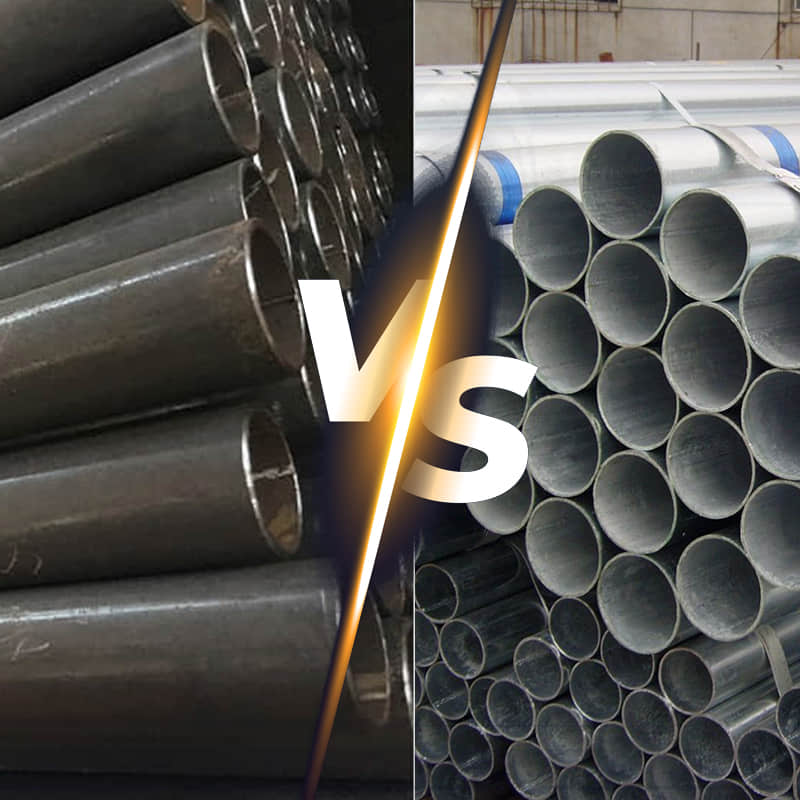
Black steel is an informal term that refers to what is officially called "black carbon steel", or, more simply, mild steel. Black steel is steel that has not been "galvanized" or coated with zinc to protect it against corrosion.
The name "black" comes from the mill scale, which is a dark-colored oxide coating that forms on the surface of steel during the production process. The mill scale is a flaky, dark material that gives the pipe or structural tube a distinctive matte finish.
Characteristics of Black Steel:
No Protective Coating: In comparison to being coated with a galvanised finish, black steel does NOT have any coating.
Oily Surface: Black steel will usually be coated with oil by the manufacturer for protection against rust during the shipping process.
High Strength: Black Steel has the same high tensile strength as other forms of steel.
Susceptibility to Rust: As there is no protective coating covering it, it will rust VERY quickly once exposed to moisture and/or humidity.
Common Misconception:
"Black Steel Pipe" represents the typical material for gas piping in the pipe industry; nevertheless, with regards to scaffolding/structural materials, typically "Black Steel" means unpainted or uncoated raw steel that will need to have some type of coating for outdoor use.
What is Galvanized Steel?
Galvanized steel is defined as steel that has been coated with protective zinc to prevent corrosion. The method most commonly used to provide this type of coverage to steel has been Hot-Dip Galvanisation (HDG), and this method creates the strongest and most durable combination of these two materials.
Hot-Dip Galvanisation is the process of immersing steel into a bath of molten zinc (around 450°C), which causes a strong metallurgical reaction between the zinc and the steel, resulting in the formation of a protective coating on both the inside and the outside surfaces of the steel product.
Key Characteristics of Galvanized Steel:
Sacrificial Protection: The galvanizing process protects steel by adding a coating of zinc to it. If the coating becomes damaged by scratches or other means, the zinc surrounding it will corrode before the steel beneath begins to rust.
Silver/Grey Appearance: The color of the zinc coating is typically silver in color and may appear shiny, and can have a spangled appearance due to the crystalline structure of the zinc.
Long Lifespan: Coating can provide protection for many years—possibly even decades—depending on exposure to weather and environmental conditions.
The Core Differences: Black Steel vs. Galvanized Steel
For our clients in scaffolding rental and construction supply, the choice between these two materials usually comes down to three factors: Corrosion, Cost, and Application.
1. Corrosion Resistance and Durability
This is the biggest differentiator.
Black Steel: Has zero natural corrosion resistance. If you use black steel scaffolding tubes in an outdoor coastal environment without painting them, they will begin to rust within days. It requires regular maintenance (cleaning, oiling, or painting) to maintain its structural integrity.
Galvanized Steel: Built for the elements. The zinc barrier prevents oxygen and water from reaching the iron, effectively stopping rust. For scaffolding companies, this is crucial. Galvanized gear can be stored outdoors in rental yards without degrading, whereas black steel gear must be stored under cover or constantly maintained.
2. Price Comparison
Budgeting is always the main objective of the trader or Project Manager.
Black Steel: Black steel's manufacturing process does not include galvanization, thus making it lower-cost than galvanized steel. Black steel is the most economical option for projects which use enclosed black steel (i.e., fire sprinkler systems within a building) and will not require painting until later.
Galvanized Steel: In comparison to black steel, galvanized steel has a price premium of between 30% and 40%. From a TCO perspective, galvanized steel generally ends up being less expensive in that it requires less maintenance and lasts longer compared to black steel.
Tip for Rental Businesses: Although purchasing black steel scaffolding is initially cheaper than buying galvanized scaffolding, the annual cost of sanding, repainting, and preserving the black steel frame often exceeds the original purchasing savings associated with buying galvanized scaffolding.
3. Applications
Here is a quick breakdown based on industry standards.
Black Steel:
Gas Lines: Steel pipes are the most common type of gas line. It is because the zinc in galvanized iron pipes eventually flakes off when the pipe is not in use for a certain amount of time, and these zinc flakes usually end up clogging up the gas injectors. Black steel pipes have become the standard for safe gas installation, whether it be for LPG or natural gas.
Closed Loop Heating Systems: Closed-loop heating systems that do not provide a continuous supply of water to maintain an adequate level of dissolved oxygen will reduce the chance of corrosion (rusting).
Structural Components (to be painted): If you are building a customized aesthetic structure that will be powder-coated a specific color, starting with black steel is more economical.
Galvanized Steel:
Scaffolding & Formwork: Ringlock, Cuplock, and frame scaffolding are almost exclusively galvanized in modern construction to ensure safety and longevity under rain and snow.
Water Supply Lines: For outdoor or industrial water transport (note: for residential drinking water, plastics/copper have largely replaced steel, but galvanized is still used in industrial settings).
Outdoor Fencing & Handrails: Any metal exposed to weather needs the protection of zinc.
Comparison at a Glance
For a quick reference, here is how the two materials stack up:
Feature
Black Steel
Galvanized Steel
Primary Component
Iron, Carbon
Iron, Carbon, Zinc Coating
Appearance
Dark Grey / Black / Matte
Silver / Grey / Shiny
Corrosion Resistance
Very Low (Rusts easily)
Very High
Initial Cost
Low
High (+30-40%)
Maintenance
High (Needs painting/coating)
Low (Self-protecting)
Best for Gas?
YES (Standard)
NO (Zinc flakes cause clogs)
Best for Water?
NO (Corrodes quickly)
YES (Industrial use)
Life Expectancy (Outdoors)
< 10 Years (without paint)
20 - 50 Years
How to Choose for Your Business?
If you are a trader or distributor, it is vital to ask your customer about the environment of the installation.
Ask: "Is this for Gas or Water?"
If Gas: Sell Black Steel.
If Water: Sell Galvanized.
Ask: "Is this for an outdoor structure or Scaffolding?"
If the client is a rental company looking for long-term ROI, recommend Galvanized Steel. It retains its resale value better and looks professional on job sites for years.
If it is a one-off project where the structure will be encased in concrete or painted immediately, Black Steel may save the budget.
Ask: "What is the climate?"
In humid regions (like Southeast Asia or coastal areas), black steel requires aggressive maintenance. We strongly recommend upgrading to Hot-Dip Galvanized options to prevent structural liability.
Conclusion
Understanding the difference between black steel and galvanized steel is more than just knowing about zinc coatings—it is about choosing the right tool for the job.
Black steel offers strength and economy, making it the king of gas lines and indoor structural applications. Galvanized steel, with its superior armor against the elements, is the undisputed champion for scaffolding, outdoor construction, and water systems.
For businesses in the construction and engineering sectors, balancing initial costs with long-term maintenance is key. Investing in the right material now saves repairs, replacements, and headaches down the road.
Ready to secure your supply?
Whether you need high-grade black steel pipes for gas infrastructure or durable hot-dip galvanized scaffolding for your next high-rise project, we have the inventory and expertise to support you.
[Contact Us Today] for a consultation or to request a competitive quote tailored to your project specs.
FAQ
Can I weld galvanized steel?
Yes, galvanized steel can be welded, but it requires extreme caution. When the zinc coating is heated, it vaporizes and releases zinc oxide fumes. Inhaling these fumes can cause "Metal Fume Fever," a temporary but severe flu-like illness. Best Practice: Always grind off the zinc coating at the weld point before welding and ensure the workspace is well-ventilated. After welding, the area must be treated with a zinc-rich paint (cold galvanizing) to restore corrosion protection.
Can I connect black steel pipes to galvanized pipes?
It is generally not recommended to connect them directly, especially in water systems. Joining dissimilar metals can trigger Galvanic Corrosion. Since zinc and black steel have different electrical potentials, the moisture in the pipe acts as an electrolyte, causing the galvanized pipe to corrode the black steel threads rapidly. If you must join them, use a dielectric union to separate the metals electrically.
Is black steel stronger than galvanized steel?
No. The structural strength (tensile and yield strength) depends on the grade of the steel (e.g., Q235, S355), not the coating. Black steel and galvanized steel made from the same base material have the same load-bearing capacity. However, because galvanized steel resists rust, it maintains its strength longer in outdoor environments compared to black steel, which weakens as it corrodes.



 en
en fr
fr es
es