Échafaudages dépendants vs. indépendants : un guide technique complet
Jan 19, 2026Choisir la meilleure solution d'accès à votre chantier est essentiel à sa réussite. L'objectif global de garantir un environnement de travail sécurisé est atteint différemment selon le type d'échafaudage utilisé.
Vous verrez très probablement deux types différents de échafaudage sur votre lieu de travail ou dans l'exercice de vos fonctions. Les deux échafaudage dépendant et échafaudages indépendants Ces deux types d'échafaudages peuvent être considérés comme identiques. Cependant, chacun présente des caractéristiques propres. Connaître leurs différences permet de les monter correctement, conformément aux normes de construction.
Dans cet article, vous découvrirez les nombreuses différences mécaniques qui existent entre les deux systèmes, ainsi que les situations dans lesquelles il est préférable d'utiliser l'un plutôt que l'autre.
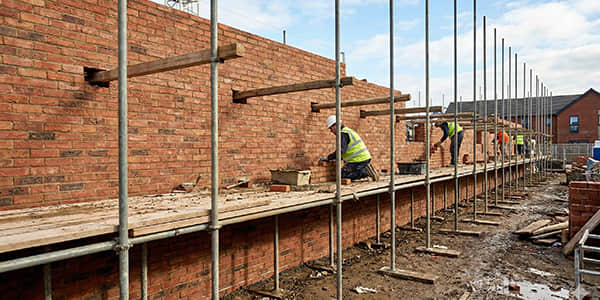
Les termes « échafaudage à montants simples » (ou « échafaudage à montants simples ») sont couramment utilisés par les constructeurs pour désigner un échafaudage dépendant. Ce dernier est défini par certains comme un échafaudage dépourvu de support indépendant et qui, par conséquent, repose sur le mur ou d'autres structures entourant sa base pour assurer sa stabilité.
Les échafaudages dépendants, ou échafaudages reposant sur un seul ensemble de supports verticaux (standard) et des traverses horizontales pour se fixer à la plateforme supérieure, doivent leur stabilité à la fois à des supports verticaux et horizontaux. Les éléments de support verticaux sont situés d'un côté de l'échafaudage, tandis que les traverses assurent le support de la plateforme en se fixant aux supports verticaux.
Historiquement, en maçonnerie de briques, on a utilisé des échafaudages dépendants (c'est-à-dire des échafaudages fixés au mur pendant sa construction). Le support de cet échafaudage, ou échafaudage continu, traverse toujours le mur lors de sa construction. Ce type d'échafaudage est généralement une solution économique pour les travaux de maçonnerie simples, car une fois démonté, le rejointoiement est relativement facile.
Nécessite moins de tubes et de raccords (une seule rangée de standards).
Interagit directement avec la structure du bâtiment.
Généralement limité à la construction en briques et en parpaings.
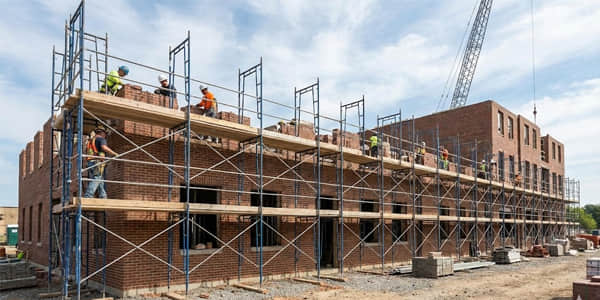
L'échafaudage indépendant, plus communément appelé échafaudage double, est le système le plus polyvalent et le plus utilisé dans la construction moderne.
La caractéristique principale de ce système est son autoportance structurelle vis-à-vis des charges verticales. Il ne dépend pas du bâtiment pour supporter le poids de la plateforme, des matériaux ou des travailleurs.
Comme il n'est pas nécessaire de percer le mur pour le support vertical, l'échafaudage indépendant est la solution standard pour :
L'utilisation de deux rangées de normes entraînera la nécessité d'une plus grande quantité de matériaux.
De plus, cette méthode est non invasive car elle ne modifie ni n'augmente la capacité portante verticale du bâtiment.
Il est capable de gérer à la fois de grandes quantités de chargement et le stockage de matériaux.
Pour bien distinguer les deux systèmes, considérons la comparaison suivante basée sur leurs composants structurels et leur utilisation :
Fonctionnalité | Échafaudage dépendant (Putlog) | Échafaudage indépendant (double) |
Normes | Une seule rangée de tubes verticaux. | Double rangée de tubes verticaux. |
Interaction avec le mur | Invasif : Les bûches reposent à l'intérieur du mur. | Non invasif : se place près du mur (nécessite uniquement des attaches). |
Support vertical | Le support vertical est assuré par la base et le mur du bâtiment. | Entièrement soutenu par le sol (via des poteaux). |
Composants | Utilise les Putlogs (extrémités aplaties). | Utilise des tableaux arrière (tubes standard). |
Réparation des trous | Obligatoire (les trous pour les rondins doivent être rebouchés). | Non requis (la surface reste intacte). |
Utilisation principale | Nouvelle construction en briques. | Accès général, maçonnerie de pierre, rénovation. |
Lors du choix d'un système d'échafaudage pour un projet de construction, il convient de prendre en compte certains aspects techniques :
1) Fondation - les matériaux de fondation existants du bâtiment.
Les fondations en pierre naturelle ne permettent que l'utilisation de systèmes d'échafaudage indépendants. Un système dépendant ne peut être construit qu'avec de la maçonnerie (briques/tuiles/blocs de petite taille) respectant les dimensions standard des madriers.
2) Exigences de chargement - Les exigences de charge sur les échafaudages indépendants sont généralement plus faciles à configurer que celles des échafaudages dépendants ; les échafaudages indépendants disposent d'un système à double rangée, ce qui signifie une capacité de renforcement supplémentaire et donc un stockage plus sûr des palettes de matériaux lourds situées sur la zone de levage d'un échafaudage indépendant.
3) Qualité de finition L'obtention d'une finition de haute qualité est une priorité absolue lors de la préparation et de l'application d'un revêtement. L'utilisation d'échafaudages indépendants permettra aux ouvriers d'accéder facilement à toutes les surfaces, réduisant ainsi le besoin de reboucher les trous et éliminant les différences de couleur dues à l'utilisation de matériaux de rebouchage différents.
Le système d'échafaudage dépendant (Putlog) pour la maçonnerie et la brique est un système d'échafaudage offrant aux corps de métier une solution économique et efficace pour la construction et la réalisation de leurs projets, comparativement à un système indépendant. Le système d'échafaudage double indépendant permet une installation discrète et offre une grande flexibilité d'utilisation, le système dépendant s'adaptant à différents types de projets de construction et de maintenance. Les systèmes dépendants supportent des charges plus élevées que les systèmes indépendants ; par conséquent, les systèmes portables conviennent aux chantiers de toutes tailles, pour tous types de travaux de construction et de maintenance.
Lorsqu'il s'agit de choisir le type de système d'échafaudage à utiliser, il est essentiel de prendre en compte le coût du produit, mais il est tout aussi important de considérer les limites de vos systèmes d'échafaudage, ainsi que les limitations, règles et réglementations spécifiques à chaque bâtiment où l'échafaudage sera utilisé.
Si vous souhaitez que nous vous aidions à choisir les matériaux et les configurations les mieux adaptés à votre projet, n'hésitez pas à nous contacter par le moyen de communication approprié. Nous serons ravis de vous proposer les solutions les plus pertinentes pour votre site.
Pourquoi l'échafaudage dépendant est-il souvent appelé « échafaudage Putlog » ?
Un échafaudage indépendant nécessite-t-il d'être fixé au bâtiment ?
Un échafaudage indépendant est-il plus cher qu'un échafaudage dépendant ?
E-mail : aj-steven@dghualifeng.com.cn


Friendly Links :
Kitchen Cabinet© 2026 Guangzhou AJ matériaux de construction Co., Ltd Tous les droits sont réservés


 en
en fr
fr es
es