Différence entre les tuyaux sans soudure et les tuyaux soudés dans la construction
Jan 27, 2026La durabilité d'une structure, qu'elle soit temporaire (comme un échafaudage) ou permanente, dépend du matériau qui la soutient sous la charge. Lors de la conception et de la construction d'une structure en acier, on parle constamment de « tubes d'acier », car ils sont indispensables à tout élément devant supporter une charge sur un échafaudage (par exemple, tout support d'échafaudage).
Cet article vise à présenter certaines différences fondamentales entre les tuyaux sans soudure et les tuyaux soudés. En voici quelques exemples :
Bien que l'apparence des tuyaux sans soudure et des tuyaux soudés soit presque identique, leur mode de fabrication et leurs capacités respectives à supporter une charge sont très différentes.
Pour déterminer les différences de performance entre ces tuyaux, il faut tenir compte du procédé de fabrication. La méthode de fabrication détermine la structure granulaire et, par conséquent, les propriétés physiques de l'acier.
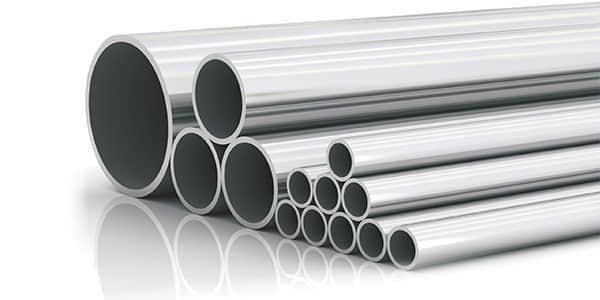
Comme son nom l'indique, un tube sans soudure ne comporte aucune couture longitudinale. Il est fabriqué par un procédé appelé extrusion.
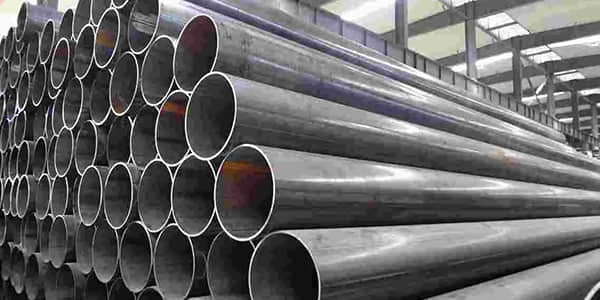
Les tuyaux soudés commencent par une plaque ou une bande d'acier plate (skelp).
Lors du choix des matériaux pour les échafaudages, les coffrages ou les infrastructures, il est essentiel de comparer les spécifications techniques. Voici une comparaison entre les tubes SMLS et les tubes soudés.
C'est souvent le facteur déterminant pour les applications structurelles.
Tubes sans soudure : L’absence de cordons de soudure confère aux tubes sans soudure une meilleure résistance à la pression interne et au poids externe. L’homogénéité de l’acier permet ainsi de calculer une pression de service supérieure d’environ 20 % à celle d’un tube soudé de même dimension et de même nuance.
Tuyaux soudés : La soudure constitue une zone distincte de la structure d'un tuyau soudé. Les traitements thermiques modernes appliqués aux parties soudées d'un empilement de tuyaux permettent d'atténuer les faiblesses qu'elles engendrent. Toutefois, certains ingénieurs appliquent des coefficients de réduction aux tuyaux soudés dans le cas de conceptions soumises à des pressions élevées ou à des charges extrêmes.
Le choix entre tuyaux sans soudure et tuyaux soudés implique souvent de trouver un équilibre entre les normes de sécurité, les conditions environnementales et les budgets des projets.
Les tubes sans soudure sont souvent privilégiés dans les environnements critiques où toute défaillance est inacceptable. Ils sont généralement spécifiés pour :
Pour la majorité des besoins en construction générale et en infrastructures, les tuyaux ERW haute fréquence constituent la norme du secteur.
Remarque : Vérifiez toujours la norme (par exemple, ASTM A53, BS 1139, EN 10219). Un tuyau soudé de haute qualité est souvent plus sûr et plus fiable qu’un tuyau sans soudure de qualité inférieure. La spécification est tout aussi importante que la méthode de fabrication.
Fonctionnalité | Tuyau sans soudure (SMLS)) | Tuyau soudé (ERW) |
Force | Force supérieure et uniforme. | Haute, mais structurellement distincte au niveau de la couture. |
Pression nominale | Capacité de haute pression. | Capacité de pression basse à moyenne. |
Finition de surface | Tolérances plus grossières et variables. | Lisse et très homogène. |
résistance à la corrosion | Haute (pas de joint où la rouille pourrait s'infiltrer). | Bon (selon le traitement). |
Incidences en matière de coûts | Investissement plus élevé. | Rentable. |
Utilisation principale | Support de charges lourdes, industriel. | Échafaudages, clôtures, construction générale. |
Le choix d'un matériau adapté est essentiel à la réussite durable de tout projet de construction. Faire le bon choix dès le départ entre tuyaux sans soudure et tuyaux soudés permet de bâtir des fondations solides pour votre projet.
Les tubes sans soudure sont conçus pour offrir une résistance optimale dans les environnements d'utilisation les plus exigeants. À l'inverse, les tubes soudés modernes offrent des performances équivalentes, voire supérieures, aux tubes soudés traditionnels pour la plupart des applications d'échafaudage et d'infrastructure, tout en étant beaucoup moins chers. Pour choisir la solution la plus adaptée, il est essentiel d'adapter les spécifications du tube sélectionné à la charge spécifique et aux conditions environnementales du projet.
Lors du choix de l'un ou l'autre de ces types de tuyaux, la meilleure façon de garantir que les tuyaux utilisés pour votre projet de construction offriront un niveau de sécurité et de performance optimal est de choisir des tuyaux conformes aux normes internationales et accompagnés d'une documentation complète de certificat d'essai en usine (MTC) vérifié.
Choisir les spécifications appropriées pour l'acier peut s'avérer très complexe. Des tubes sans soudure à haute résistance, conçus spécifiquement pour les charges de service exigeantes, aux applications plus générales de tubes soudés en vrac, de nombreuses options existent ; pour déterminer la solution la plus adaptée, consulter un expert peut vous aider à affiner votre choix.
Notre équipe est là pour vous aider à répondre aux exigences de votre projet et à déterminer l'option de tuyau en acier appropriée pour satisfaire à vos besoins en matière de capacité de charge.
Les tuyaux soudés peuvent-ils être utilisés en toute sécurité pour la construction d'échafaudages ?
Oui, absolument. Les tubes soudés de haute qualité (notamment les tubes soudés ERW haute fréquence) constituent la norme dans la plupart des échafaudages de façade et d'accès. Dès lors qu'ils sont fabriqués conformément aux normes reconnues telles que EN 39 ou BS 1139, ils offrent une résistance et une sécurité suffisantes pour une utilisation générale dans le secteur de la construction. Les tubes sans soudure sont généralement réservés aux environnements spécialisés, soumis à des charges élevées ou industriels.
Comment puis-je distinguer visuellement les tuyaux sans soudure des tuyaux soudés ?
Le signe le plus évident est la ligne de soudure.
Un tuyau sans soudure est-il toujours plus résistant qu'un tuyau soudé ?
E-mail : aj-steven@dghualifeng.com.cn


Friendly Links :
Kitchen Cabinet© 2026 Guangzhou AJ matériaux de construction Co., Ltd Tous les droits sont réservés


 en
en fr
fr es
es